
Reading Support
The Gryphon School places reading at the heart of our work to ensure every pupil can access the curriculum, flourish academically and personally, and “experience life in all its fullness.”
Our vision for reading
We believe reading is both a shared responsibility and a foundation for success across subject areas. Our priorities are to:
- Raise the profile of reading as a whole-school responsibility, not just an English department task.
- Prioritise identifying and addressing reading needs so pupils can access learning, rather than only promoting reading for pleasure.
- Engage pupils with a broad range of texts – classical, modern and non‑fiction – through curriculum design, interventions and extra‑curricular opportunities
How reading reflects the Gryphon ethos and values
Reading at The Gryphon is deliberately linked to our 10:10 vision and Christian values:
-
Leadership: we train pupils to lead book groups and act as Sixth Form reading mentors.
-
Integrity: we ensure fair access to texts and targeted support for disadvantaged and SEND pupils.
-
Fellowship: we build community around shared reading activities such as World Book Day events, book swaps and assemblies.
-
Exploration: our curriculum encourages curiosity through varied genres, authors and non‑fiction study.
The English Department approach
The English department leads classroom reading through a consistent, engaging approach:
-
Fast‑Paced Reads: short, focused reading units designed to build fluency, comprehension and stamina.
-
Track My Read Homework: we use a free online platform that logs independent reading. Since September, Year 7 pupils have logged 108,985 hours, equivalent to 75 continuous days of reading.
-
Reading as a focus of the Curriculum units across all Key Stages.
-
Teacher recommendations and departmental bookshelves to promote a range of high‑quality titles.
Whole‑school approach
Reading is embedded beyond English lessons and delivered jointly by English and Learning Support (LS):
-
Whole‑class and whole‑school classroom reading strategies to support comprehension across subjects.
-
Assemblies, tutor‑time reading and displays to keep reading visible and celebrated.
-
Annual Book Fair and regular events to raise the profile of reading across the school.
Nurture and SEND approach
We take a sensitive, evidence‑based approach to pupils with additional needs:
-
Targeted nurture strategies in small groups that build confidence and reading skills.
-
Prioritisation of disadvantaged and SEND pupils for intervention and resources.
-
Specialist resources and multi‑sensory reading approaches where appropriate.
Literacy intervention process
Our literacy interventions are structured, monitored and responsive:
-
Screening and identification: routine baseline checks and teacher referrals identify pupils with reading needs.
-
Targeted intervention: small‑group or one‑to‑one programmes, delivered by trained staff from English and LS.
-
Monitoring and evaluation: progress is tracked, reviewed and shared with parents; successful students move to independent reading support and mentoring roles.
-
We can demonstrate strong progress for pupils who take part in these programmes, measured through regular assessments and reading logs.
You can see the process of our interventions by clicking on the images below
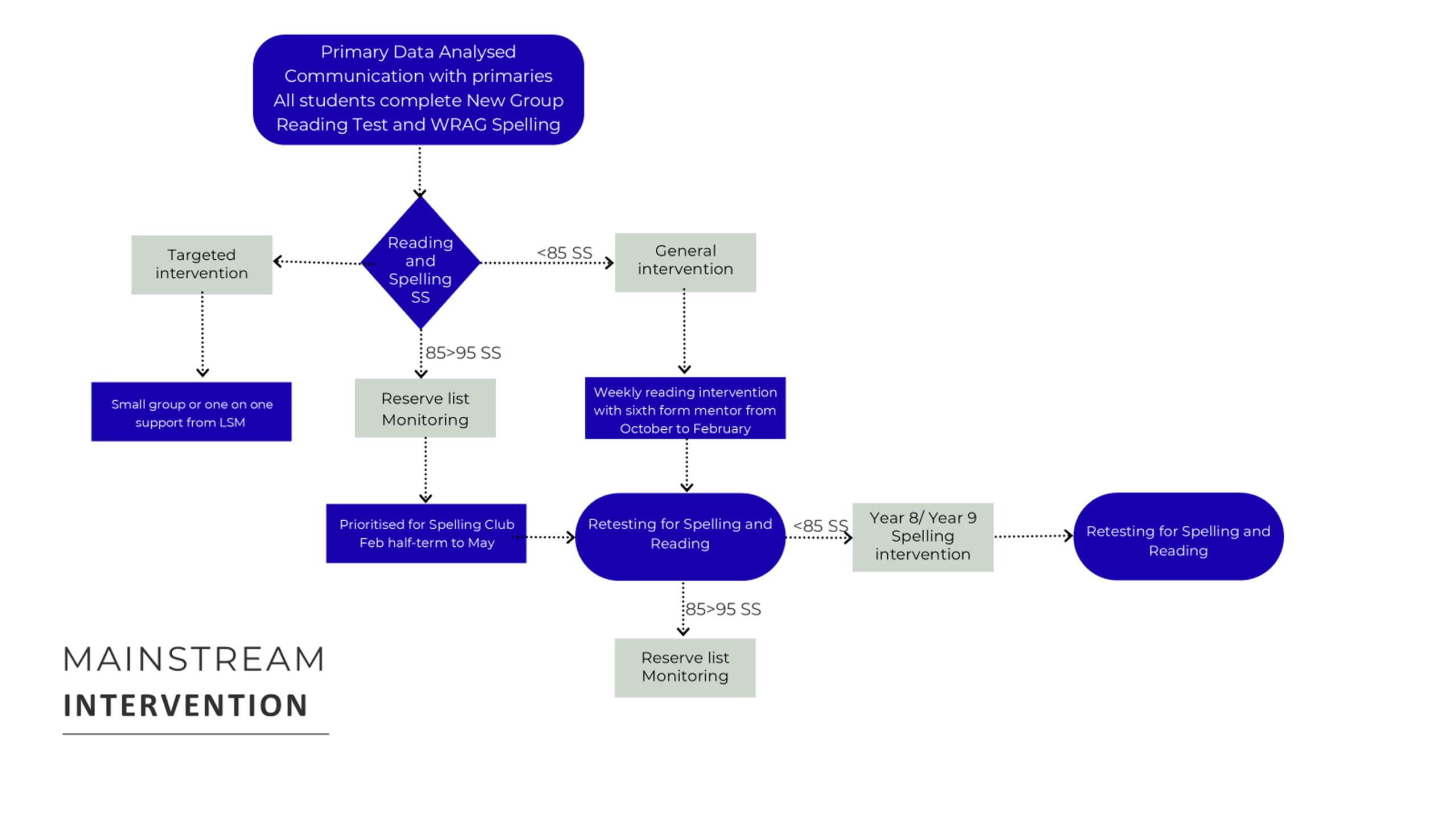
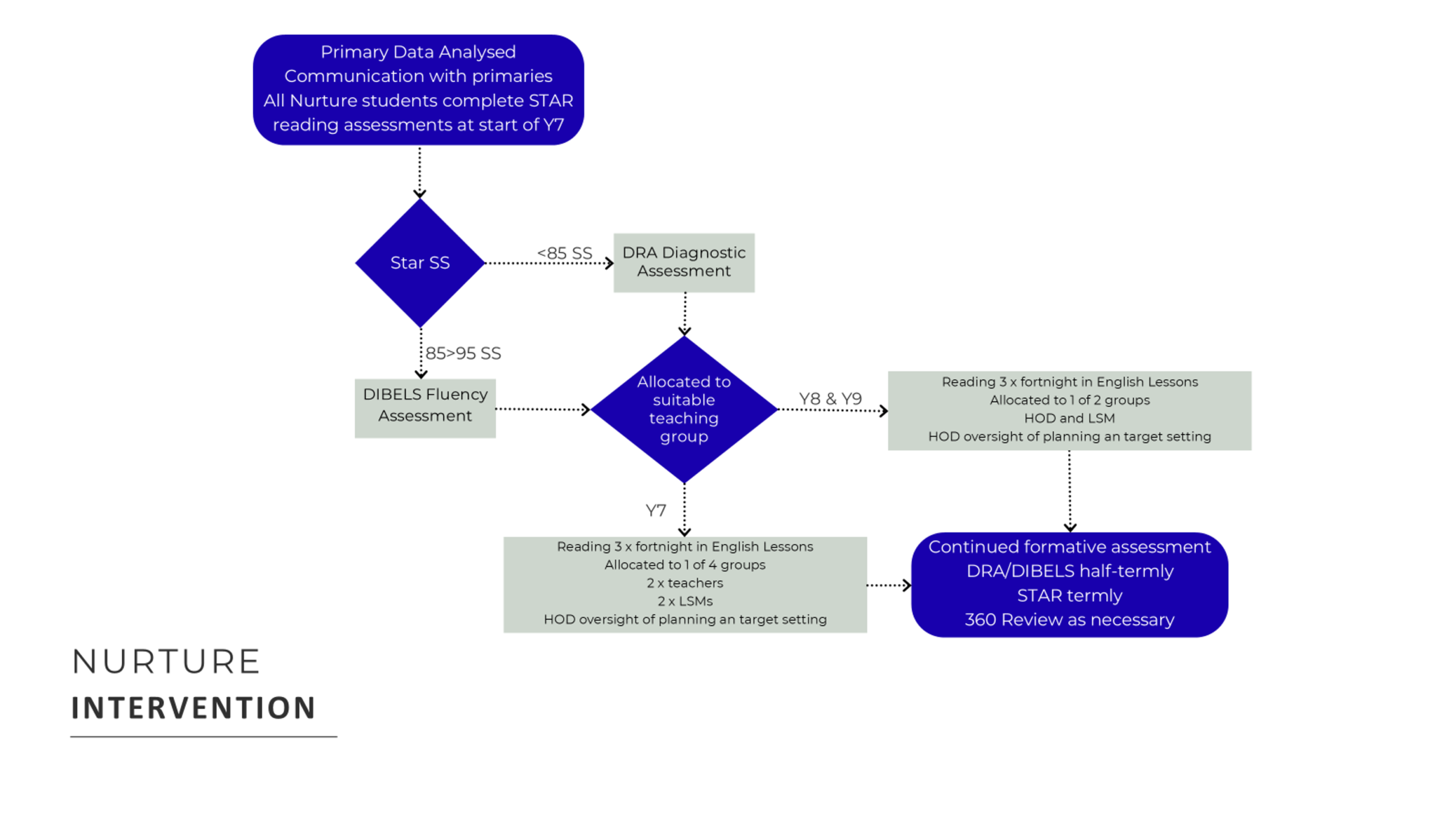
Sixth Form reading mentors
Sixth Form pupils play a vital role in building a reading culture:
-
Mentors support younger pupils in paired reading, reading clubs and guided sessions.
-
Mentoring develops leadership skills in older pupils and provides role models for younger readers.
Disadvantaged pupil and SEN strategy
We prioritise support to reduce barriers to reading:
-
Focus resources and interventions on disadvantaged and SEN pupils to close gaps in attainment.
-
Use accessible, engaging texts and provide materials at appropriate reading levels.
-
Increase communication and support for parents to help reading at home.
Creating a culture of reading – events and activities
We embed reading into school life with events including:
-
World Book Day: costumes, a literary treasure hunt, National Book Tokens, book swap and book shop.
-
Annual Book Fair and regular themed reading weeks.
-
Assemblies celebrating reading achievements and author spotlights.
-
Teacher recommendations, departmental bookshelves and using our new book nook.
How parents can support with reading
We encourage parents to support reading at home by:
-
Talking about books and authors with pupils, however briefly.
-
Visiting the local library and encouraging pupils to use the library resources in school
-
Checking and encouraging use of our online independent reading tracker.
Parents who would like to learn more about how to support their child’s reading journey can contact Ms Barnes or Mrs Weeks to find out more.

Year 9 Cookery Club
6th July
It has been a busy week in the Food department. Year 9 cookery club have been making afternoon tea inspired ideas while Year 10 have been practicing their sweet and savoury presentation...
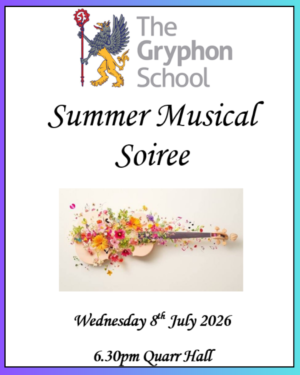
Summer Musical Soirée
6th July
Join us for The Gryphon School Summer Musical Soirée on Wednesday 8th July at 6.30pm in the Quarr Hall. Our talented students will be showcasing an evening of fantastic live music, singing...

Gryphon Alumni Success
7th July
We are delighted to celebrate the success of two former Gryphon School students who are achieving exciting milestones in their chosen careers. Ruby White Selected for Team England Commonwealth Games Squad Former...