
English
KS3 English
Key Contact: Amelia Barnes abb@gryphon.dorset.sch.uk
The curriculum in English is based on the study of a diverse range of texts, both fiction and non-fiction, across a range of genres. Our schemes of work are planned to include a range of teaching and learning approaches to help students develop their skills in reading, writing and speaking and listening. We believe strongly in developing skills for life, as well as fostering an enjoyment of all forms of language and literature. Students will experience an increasingly challenging diet of texts as they progress through Year 7, 8 & 9, with the aim to be ready to understand and enjoy advanced level texts by the time they get to Year 10.
Course Content
Year 7 (not studied in order)
- 7.1: Pre 1900s – Gothic extracts
- 7.2: Modern Drama – Frankenstein by Mary Shelley (the Philip Pullman playscript)
- 7.3: Shakespeare – A Midsummer Night’s Dream or The Tempest
- 7.4: Modern prose – The Breadwinner by Deborah Ellis/Underground to Canada by Barbara Smucker
- 7.5: Poetry – Introduction to poetry
- 7.6: Non-fiction/language – Arctic Adventures
PLUS a fast paced read – either The Graveyard Book by Neil Gaiman or I Am Malala by Malala Yousafzai
Year 8 (not studied in order)
- 8.1: Pre 1900s – Extracts & Short stories – selected writers
- 8.2: Modern drama – Whispers in the Graveyard by Theresa Breslin
- 8.3: Shakespeare – Much Ado About Nothing
- 8.4: Modern prose – Noughts and Crosses by Malorie Blackman or Stone Cold by Robert Swindells or Dystopian fiction by selected writers
- 8.5: Poetry – Poems of rebellion – selected poets
- 8.6: Non-fiction/language – History of English – selected writers
PLUS a fast paced read – either Boy 87 by Ele Fountain or Black and British by David Olusoga
Year 9 (not studied in order)
- 9.1: Pre 1900s – The Speckled Band by Arthur Conan Doyle
- 9.2: PPE preparation – Reading and writing fiction texts
- 9.3: Shakespeare – Romeo and Juliet or Merchant of Venice
- 9.4: Modern prose – The Woman in Black by Susan Hill or To Kill a Mockingbird by Harper Lee or Lord of the Flies by William Golding or Of Mice and Men by John Steinbeck
- 9.5: Poetry – Love & Conflict – selected poets
- 9.6: Non-fiction/language – Touching the Void by Joe Simpson & Between a Rock and a Hard Place by Aron Ralston
Assessment
KS3 Assessment will comprise one formal, extended, assessment per unit, covering reading, writing, speaking and listening across the year.
Year 7
- 7.1: Creative writing assessment
- 7.2: Creative writing assessment
- 7.3: Reading assessment
- 7.4: Reading assessment
- 7.5: Speaking & Listening assessment
- 7.6: Functional writing assessment
Year 8
- 8.1: Creative writing assessment
- 8.2: Speaking & Listening assessment
- 8.3: Reading assessment
- 8.4: Reading assessment
- 8.5: Functional writing assessment
- 8.6: Creative writing assessment
Year 9
- 9.1: Reading assessment
- 9.2: PPE Creative writing
- 9.3: Speaking & listening assessment
- 9.4: Reading assessment
- 9.5: Reading assessment
- 9.6: Functional writing assessment
Homework
Set twice in a unit, either a Forms vocabulary assessment, a Forms comprehension quiz or a Seneca assignment. Reading for pleasure is ongoing, using Track My Read to log how much and what they are reading.
KS3 Progression
Throughout their time at the Gryphon, English students follow a spiral curriculum which covers the full range of text types that are present in the English Literature and English Language GCSE and A Level exams. This includes 19th century and modern novels, plays, poetry, non-fiction texts and Shakespeare. This journey begins in Year 7 as they encounter the crucial knowledge and skills to access a range of increasingly complex texts with fluency and independence exploring writers’ methods, themes, contexts and viewpoints while developing a secure understanding of literary concepts and subject-specific vocabulary. Through regular opportunities to write for a range of purposes and audiences, they refine their ability to communicate clearly, accurately and creatively, making increasingly deliberate choices about structure, style and language. Reading, writing, oracy and literacy are deeply embedded into our schemes of work to support students to succeed across the curriculum.
KS3 End point
By the end of Key Stage 3, students are increasingly confident in analysing texts, constructing well-supported interpretations and evaluating the impact of language, form and structure. Pupils progress through carefully scaffolded instruction towards independence, ensuring they are fully prepared for the demands of Key Stage 4. They have developed resilience through drafting, editing and reflection, while discussion, debate and collaborative learning strengthen their oracy, critical thinking and ability to express informed ideas.
Useful information, links and resources
https://trackmyread.org/school/the-gryphon-school-725123
https://app.senecalearning.com/login
KS4 English Literature
Key Contact: Rob Glossop rpg@gryphon.dorset.sch.uk
Syllabus Information: AQA GCSE English Literature 8702
Course Content
The course encourages students to develop knowledge and skills in reading, writing and critical thinking. Through literature, students have a chance to develop culturally and acquire knowledge of the best that has been thought and written. Studying GCSE English Literature should encourage students to read widely for pleasure, and as a preparation for studying literature at a higher level. There are two terminal, closed book, exams – Paper 1 assessed Shakespeare and the 19th Century novel, Paper 2 assesses Modern Texts and poetry.
Year 10
- Half Term 1: Paper 2 An Inspector Calls by J.B Priestley
- Half Term 2: Paper 2 An Inspector Calls and start A Christmas Carol by Charles Dickens
- Half Term 3: Paper 1 A Christmas Carol
- Half Term 4: Paper 1 Macbeth by William Shakespeare & PPE practice
- Half Term 5: Paper 1 PPE & finish Macbeth
- Half Term 6: Paper 2 Power & Conflict Poetry
Year 11
- Half Term 1: Paper 2 Power & Conflict Poetry
- Half Term 2: Paper 2 Power & Conflict Poetry & PPE revision
- Half Term 3: Revision and exam practice of both papers
- Half Term 4: Revision and exam practice of both papers
- Half Term 5: Revision and exam practice of both papers
Assessment
Assessment at KS4 will comprise a series of practice extended exam responses, completed in timed conditions, focusing on key assessment objectives like selecting relevant evidence, analysing writer’s methods and evaluating the context of each set text. Alongside this, students will do regular knowledge based assessments and unseen fiction comprehension tests to hone their independent reading skills.
Year 10
- Assessment 1: An Inspector Calls assessment
- Assessment 2: An Inspector Calls assessment
- Assessment 3: Unseen Comprehension test/knowledge assessment
- Assessment 4: A Christmas Carol assessment
- Assessment 5: A Christmas Carol assessment
- Assessment 6: Unseen Comprehension test/knowledge assessment
- Assessment 7: PPE practice question
- Assessment 8: Macbeth assessment
- Assessment 9: Macbeth assessment
- Assessment 10: PPE – Paper 2 Section A
- Assessment 11: Unseen Comprehension test/knowledge assessment
- Assessment 12: Poetry comparison assessment
Year 11
- Assessment 1: Poetry comparison assessment
- Assessment 2: Paper 1 practice question
- Assessment 3: PPE Paper 1 Section A
- Assessment 4: PPE Paper 1 Section B
- Assessment 5: Paper 2 practice question
- Assessment 6: Paper 2 practice question
- Assessment 7: PPE – Paper 2 Section A
- Assessment 8: PPE – Paper 2 Section B
- Assessment 9: PPE – Paper 2 Section C
- Assessment 10: Exam practice – either paper
Homework
Set once a week – either a 30 minute Seneca assignment, wider reading/research or a Forms comprehension quiz on unseen fiction and non fiction texts.
Useful information, links and resources
https://www.aqa.org.uk/subjects/english/gcse/english-literature-8702
KS4 English Language
Key Contact: Prue Bendell prb@gryphon.dorset.sch.uk
Syllabus Information: AQA GCSE English Language 8700
Course Content
Students will draw upon a range of texts as reading stimulus and engage with creative as well as real and relevant contexts. Students will have opportunities to develop higher-order reading and critical thinking skills that encourage genuine enquiry into different topics and themes.
This specification will ensure that students can read fluently and write effectively. Students will be able to demonstrate a confident control of Standard English and write grammatically correct sentences, deploying figurative language and analysing texts.
Year 10
- Half Term 1: Paper 1 Reading unseen fiction
- Half Term 2: Paper 1 Writing fiction
- Half Term 3: Paper 1 Reading unseen fiction & PPE practice
- Half Term 4: Paper 1 Writing unseen fiction & PPE practice
- Half Term 5: Spoken Language presentation
- Half Term 6: Spoken Language presentation & Paper 2 Writing non fiction
Year 11
- Half Term 1: Paper 2 Reading unseen non-fiction
- Half Term 2: Paper 2 Writing non-fiction & PPE practice
- Half Term 3: Paper 1 Reading unseen fiction & PPE practice
- Half Term 4: Paper 1 Writing unseen fiction & PPE practice
- Half Term 5: Exam preparation for both papers
Assessment
Assessment at KS4 will comprise a series of shorter pieces of exam practice, focusing on key skills like inference, analysis, summary comparison, as well as writing for specific audiences and purposes. Alongside this, students will do regular unseen fiction and non-fiction comprehension tests to hone their independent reading skills.
Year 10
- Assessment 1: Baseline writing assessment
- Assessment 2: Comprehension test 1
- Assessment 3: Paper 1 reading assessment
- Assessment 4: Comprehension test 2
- Assessment 5: Paper 1 writing assessment
- Assessment 6: Comprehension test 3
- Assessment 7: Paper 1 PPE practice
- Assessment 8: Comprehension test 4
- Assessment 9: PPE Paper 1 Section B
- Assessment 10: PPE Paper 1 Section A
- Assessment 11: Comprehension test 5
- Assessment 12: Comprehension test 6
Year 11
- Assessment 1: Paper 2 reading assessment
- Assessment 2: Comprehension test 1
- Assessment 3: PPE Paper 2 Section A
- Assessment 4: PPE Paper 2 Section B
- Assessment 5: Comprehension test 2
- Assessment 6: Comprehension test 3
- Assessment 7: PPE Paper 1 Section A
- Assessment 8: PPE Paper 1 Section B
- Assessment 9: Paper 1 exam practice
- Assessment 10: Paper 2 exam practice
Homework
Set once a week – either a 30 minute Seneca assignment, wider reading/research or a Forms comprehension quiz on unseen fiction and non fiction texts.
KS4 Progression
At KS4, students build upon the reading, writing and analytical skills developed at KS3 through the study of a range of literary and non-fiction texts. Across both GCSE English Language and English Literature, students learn how writers use language, structure and form to create meanings and effects, while also developing the ability to communicate clearly, accurately and effectively in their own writing. Through engagement with texts from different times and contexts, students develop their critical thinking, cultural awareness and appreciation of the power of language.
In Year 11, students deepen their understanding of the GCSE English Language and English Literature specifications through increasingly sophisticated analysis and evaluation. In English Literature, they study a Shakespeare play, a nineteenth-century novel, a modern text and a range of poetry, developing the ability to analyse writers’ methods and explore how meanings are shaped. They also learn to evaluate texts critically and use relevant textual references to support well-developed interpretations.
In English Language, students refine their skills in comprehension, analysis, evaluation and transactional and creative writing. They develop their ability to identify and interpret explicit and implicit meanings, analyse how writers use language and structure to influence readers, evaluate perspectives and ideas, and produce clear, effective and technically accurate writing for a range of purposes and audiences. Throughout the course, students engage with challenging texts and authentic writing tasks, enabling them to develop confidence in constructing independent interpretations, selecting and using evidence effectively, and communicating their ideas with increasing precision and sophistication.
KS4 End point
By the end of KS4, students will be able to demonstrate secure knowledge and understanding of a wide range of literary and non-fiction texts, including how writers use language, structure and form to create meaning and influence readers. They will be able to analyse themes, characters, ideas and perspectives across different texts, while showing an understanding of the social, historical and cultural contexts in which they were written.
Students will be able to interpret and evaluate unseen and familiar texts, selecting relevant evidence to support their ideas and making informed, perceptive judgements about writers’ methods and intentions. They will demonstrate the ability to construct clear, coherent and analytical written responses in GCSE-style assessments, using accurate subject terminology, well-chosen textual references and developed critical interpretations.
Students will also be able to adapt their writing for a range of purposes, audiences and forms, crafting effective descriptive, narrative, transactional and argumentative pieces. They will write with increasing accuracy and control, employing a varied vocabulary, secure spelling, punctuation and grammar, and a deliberate use of language and structural techniques to achieve intended effects. They will communicate confidently through both written and spoken language, presenting and justifying viewpoints with clarity, organisation and appropriate use of evidence.
Useful information, links and resources
https://www.aqa.org.uk/subjects/english/gcse/english-language-8700
English Learning JourneyDownload

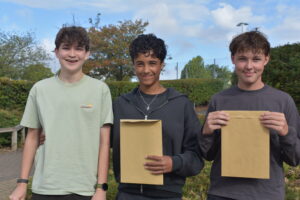
Gryphon Students Celebrate Strong GCSE Results
20th August
The Gryphon School is delighted to celebrate the achievements of its Year 11 students following a strong set of GCSE results. The outcomes reflect the school’s commitment to high achievement, inclusion and...
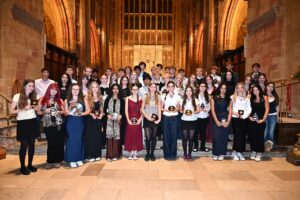
Year 11 & 13 Celebration
11th September
We were incredibly proud to recognise the outstanding achievements of our Year 11 and Year 13 students on Thursday 10th September in the wonderful Sherborne Abbey, celebrating their hard work, commitment and...
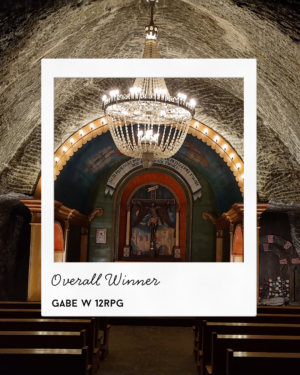
Sacred Spaces Photography Competition
5th October
Over the summer the RE department ran a Sacred Spaces Photography competition, inviting students to submit their own original photographs of a sacred space they have visited. Students were challenged to capture...