
English Literature
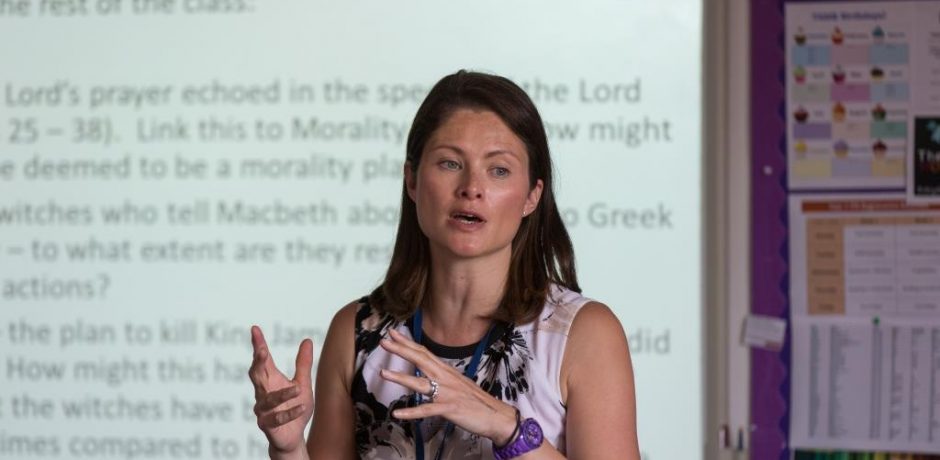
Subject: English Literature
Key Contact: Rob Glossop rpg@gryphon.dorset.sch.uk
Syllabus Information: AQA A Level English Literature A 7712
Course Content
English Literature A’s historicist approach to the study of literature rests upon reading texts within a shared context. Working from the belief that no text exists in isolation but is the product of the time in which it was produced, English Literature A encourages students to explore the relationships that exist between texts and the contexts within which they are written, received and understood. Studying texts within a shared context enables students to investigate and connect them, drawing out patterns of similarity and difference using a variety of reading strategies and perspectives. English Literature A privileges the process of making autonomous meaning, encouraging students to debate and challenge the interpretations of other readers as they develop their own informed personal responses.
Year 12
- Half Term 1: Paper 1 Section C Jane Eyre OR The Great Gatsby /Paper 2 Section B One Flew Over the Cuckoo’s Nest
- Half Term 2: Paper 1 Section C Jane Eyre OR The Great Gatsby + AQA Anthology poetry/Paper 2 Section B One Flew Over the Cuckoo’s Nest + Cat on a Hot Tin Roof
- Half Term 3: Paper 1 Section C AQA Anthology poetry/Paper 2 Section B One Flew Over the Cuckoo’s Nest + Cat on a Hot Tin Roof
- Half Term 4: Paper 1 Section B Unseen Poetry/Paper 2 Section B Unseen Prose
- Half Term 5: Paper 1 Section A Othello + PPE practice/Paper 2 PPE practice
- Half Term 6: PPE practice + Introducing NEA/Paper 2 Feminine Gospels + PPE practice
Year 13
- Half Term 1: Paper 1 Section A Othello + NEA/Paper 2 Section A Feminine Gospels
- Half Term 2: Paper 1 Section A Othello + NEA + PPE practice/Paper 2 Section A Feminine Gospels + PPE practice
- Half Term 3: Paper 1 PPE practice/Paper 2 PPE practice
- Half Term 4: Paper 1 Revision & exam prep/Paper 2 Revision & exam prep
- Half Term 5: Paper 1 Revision & exam prep/Paper 2 Revision & exam prep
Assessment
A mixture of formative assessment (knowledge tests, presentations and short mark questions) and formal exam essay responses.
Homework
Set once a week by each teacher – a mixture of wider reading/research, Seneca assignments, completing class work/assessments, drafting NEA and doing specific revision tasks to consolidate learning. Summer homework (Y12 to Y13) is to read the two primary texts and do initial note-taking for the NEA.
KS5 Progression
At KS5, students progress from developing literary knowledge and analytical skills at GCSE to exploring texts as products of particular literary, social, historical and cultural contexts. Through the study of prose, poetry and drama from different periods, they develop a sophisticated understanding of how literature reflects, shapes and challenges ideas about love, power, identity, conflict, gender, class and human experience. They also deepen their understanding of literary traditions, genres and movements, recognising the ways in which texts engage in dialogue with one another across time.
Students are expected to apply their knowledge of language, form and structure to increasingly complex literary texts, exploring how writers create meaning and how interpretations can be influenced by context, audience and critical perspective. In addition, they apply their understanding to comparative study, examining connections and contrasts between texts and evaluating how similar themes and concerns are presented in different literary and historical settings.
Throughout KS5, students refine their understanding of literary interpretation, engaging with a range of critical viewpoints and recognising that meanings are often contested and multifaceted. They develop an appreciation of the significance of genre, context and authorial choices, as well as the ways in which texts are received and reinterpreted over time. Through independent reading and research, students deepen their knowledge of literary debate and the evolving nature of literature’s place within society and culture.
KS5 End point
At KS5, students progress from developing literary knowledge and analytical skills at GCSE to exploring texts as products of particular literary, social, historical and cultural contexts. Through the study of prose, poetry and drama from different periods, they develop a sophisticated understanding of how literature reflects, shapes and challenges ideas about love, power, identity, conflict, gender, class and human experience. They also deepen their understanding of literary traditions, genres and movements, recognising the ways in which texts engage in dialogue with one another across time.
Students are expected to apply their knowledge of language, form and structure to increasingly complex literary texts, exploring how writers create meaning and how interpretations can be influenced by context, audience and critical perspective. In addition, they apply their understanding to comparative study, examining connections and contrasts between texts and evaluating how similar themes and concerns are presented in different literary and historical settings.
Throughout KS5, students refine their understanding of literary interpretation, engaging with a range of critical viewpoints and recognising that meanings are often contested and multifaceted. They develop an appreciation of the significance of genre, context and authorial choices, as well as the ways in which texts are received and reinterpreted over time. Through independent reading and research, students deepen their knowledge of literary debate and the evolving nature of literature’s place within society and culture.
Useful information, links and resources
https://www.aqa.org.uk/subjects/english/as-and-a-level/english-literature-a-7711-7712

Dance the Night Away 2026
2nd July
We are delighted to invite you to Dance The Night Away - our annual dance show choreographed and performed by Gryphon Staff and Students. Taking place on July 9th at The Gryphon...
SAST Admissions Policy Consultation
12th October
Dear Parents, Carers and Stakeholders, Sherborne Area Schools’ Trust (SAST) is the admissions authority for all schools within the Trust. Under section 1.42 of the Schools Admission Code 2014, SAST schools are...

Stronger Together!
2nd July
Our first ‘Stronger Together’ session took place in our CrossFit Gym this evening! Parents and children came together to work out together and did an incredible job. Some great competition and teamwork...