RE
Key Contact: Laura Pittard: lep@gryphon.dorset.sch.uk
Religious Education at the Gryphon is firmly rooted in the belief in having life in all of its fullness (John 10:10). We encourage students in the development of wisdom, though fostering an excitement about learning and an ability to reflect thoughtfully on theological and philosophical issues. We also believe that Religious education plays an integral part in our community, giving all students the opportunity to explore the spiritual diversity of the world and reflect for themselves on their own spirituality and world views. This then feeds into the value of dignity as a fundamental aspect of RE is the understanding that it is acceptable to disagree, to understand and respect a view that may be different from their own and to treat all with respect. Lastly, we believe that RE provides opportunities for hope. By looking at the world around us, understanding the need for change and being inspired by those who have made a difference in the world. As a Church of England school we believe that Religious Education has a central part to play in the development of each student. As a result every student gets the opportunity to take part in Religious Education.
Course Content
Year 7
Half Term 1 & 2: Philosophy. The students will explore a range of philosophical questions such as; do I exist? Who am I? Can I trust my senses? Does God exist? Why is there something rather than nothing? These are considered through discussion, experiments, research and creative writing.
Half Term 3 & 4: Christianity – the life of Jesus. Students will look at the key events in the life of Jesus: incarnation, teaching, miracles, the passion, resurrection, ascension, Parousia and the second coming. They will explore what happened and how these events impact on Christians today. They will use research or Biblical evidence, creative writing, drama and role play to understanding the impact of Jesus’ life.
Half Term 5 & 6: Ethics. Students will explore different ethical approaches and apply these to situations such as business ethics and Children’s Rights. There is a clear link made to the school’s status as a Rights Respecting School.
Year 8
In Year 8 students have the opportunity to explore a variety of questions from the perspective of different world faiths including Hinduism, Buddhism, Sikhism, Christianity and Islam. Students will explore these questions using a range of source material from a variety of perspectives. They will respond creatively and be encouraged to debate and discuss and to develop their own reasoned judgements on the issues.
The questions explored will include:
- Half Term 1: Should we eat meat?
- Half Term 2: How do people celebrate?
- Half Term 3: Why are narratives important in religion?
- Half Term 4 & 5: How can we help others?
- Half Term 6: How does religion shape identity?
Year 9
In Year 9 we focus on the impacts that beliefs have on individuals and societies. We examine divergent views within religion and explore the responses that have come from faith.
Half Term 1 & 2: Other Belief Systems. An exciting opportunity for students to consider what makes a religion by looking at alternative systems such as Shinto, Scientology, Jedi’s and Humanism. Students will be encouraged to evaluate what they think is a religion and to explore what impact religion has on people’s lives today.
Half term 3 & 4: The impact of the Holocaust. Students will be explore Judaism and the impact that the Holocaust has on the Jewish population. We cover a range of creative and spiritual responses to the Holocaust and the impact on faith.
Halt Term 5 & 6: Celebrating Diversity – Here students will look at people who were inspired by their faith to change the world such as Gandhi and Martin Luther King. Students will reflect on key social justice issues around the world and what changes they would make about the world around them. They also have the opportunity to look at a range of ways we can celebrate difference.
Assessment
Students will complete 4 assessment tasks each year in KS3. These tasks will be in the form of extended writing through essays and exam-style questions. The Assessment headings are as follows:
Year 7
- Assessment 1: Baseline Assessment. Exam style questions.
- Assessment 2: Creation – why is there something rather than nothing? Extended Essay.
- Assessment 3: The Prophesies of Isaiah. Source work task.
- Assessment 4: How is Jesus represented through art? Extended Essay.
Year 8:
- Assessment 1: Baseline Assessment. Exam style questions.
- Assessment 2: Should we eat meat? Extended Essay.
- Assessment 3: Religious Narratives. Exam style questions.
- Assessment 4: The impact of the Hajj. Newspaper report.
Year 9:
- Assessment 1: Baseline Assessment. Exam style questions.
- Assessment 2: The impact of World views. Extended essay.
- Assessment 3: The impact of the Holocaust.
- Assessment 4: End of Year exam. Exam style questions.
Homework
Students will be set 1 piece of homework per term for RE in KS3. This homework will include learning key vocabulary, independent research tasks, create responses tasks and revision tasks for assessments. All homework will be set via Teams.
KS3 Progression
Students progress from exploring fundamental philosophical and ethical questions in Year 7, to examining religious perspectives on contemporary issues in Year 8, before analysing the impact of beliefs and worldviews on individuals and society in Year 9. Throughout KS3, they develop their ability to investigate, evaluate and communicate reasoned judgements using a range of religious, philosophical and ethical perspectives.
KS3 End point
By the end of Key Stage 3, students will be able to explain and evaluate a range of religious, philosophical and ethical beliefs, analyse their impact on individuals and communities, and communicate informed, reasoned judgements using relevant evidence and sources.
Useful information, links and resources
https://www.bbc.co.uk/bitesize/subjects/zh3rkqt
Religious Education lessons for Key Stage 3 students – Oak National Academy (thenational.academy)
Key Stage 4 Subject overview
Key Contact: Laura Pittard lep@gryphon.dorset.sch.uk
Syllabus Information: Students study AQA Religious Studies A, with Christianity and Hinduism as the religions of study for paper 1
Course Content
Year 10
- Half term 1: Religion and Life
- Half term 2: Christian Beliefs
- Half term 3: Crime
- Half term 4: Hindu Beliefs
- Half term 5: Relationships
Year 11
- Half term 1: Hindu Practices
- Half term 2: Human rights and social justice
- Half term 3: Christian Practices
- Half term 4: Revision
- Half term 5: Revision
Assessment
Students will complete 12 assessment tasks in Year 10 and 10 in Year 11. These tasks will be in the form of exam-style questions. The Assessment headings are as follows:
Year 10
- Abortion 12 marker
- Euthanasia 12 marker
- Environment 1, 4 and 6 markers
- Christian Beliefs 1, 1, 4, 6, and 12 markers
- Life of Jesus 3 x 4 markers
- Punishment 4 and 6 markers
- Prison 12 marker
- Avatars 2 x 4 markers and 2 x 6 markers
- Hindu Beliefs 12 marker
- PPE
- Sex before marriage 3 x 4 markers
- Divorce 12 marker
Year 11
- Hindu worship 4 and 12 marker
- Focus of worship 12 marker
- Yoga 12 marker
- PPE
- Aims of life 12 marker
- Discrimination 6 and 12 markers
- Exploitation 12 marker
- PPE
- Christian worship 2 x 6 markers
- Prayer 12 marker
Homework
Homework: Students will be set a carousel of tasks which will include practice exam questions, Seneca, EdPuzzle, and research opportunities to help them consolidate the knowledge they learn in class.
KS4 Progression
At KS4, students build on their KS3 understanding by developing detailed knowledge of Christian and Hindu beliefs and practices, alongside the study of contemporary ethical issues. Through regular exam-style assessment, they refine their ability to analyse religious teachings, evaluate different viewpoints, and construct well-reasoned arguments using evidence and specialist vocabulary in preparation for GCSE examinations.
KS4 End point
By the end of KS4, students will be able to demonstrate secure knowledge and understanding of Christian and Hindu beliefs and practices, critically evaluate religious and ethical issues from multiple perspectives, and construct coherent, evidence-based arguments using accurate religious teachings and specialist terminology in GCSE-style responses.
Useful information, links and resources
https://drive.google.com/file/d/14iu_O5WBWnVX_H7vLHb1qZB8xI9GZe8w/view?usp=sharing
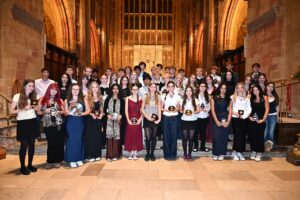
Year 11 & 13 Celebration
11th September
We were incredibly proud to recognise the outstanding achievements of our Year 11 and Year 13 students on Thursday 10th September in the wonderful Sherborne Abbey, celebrating their hard work, commitment and...
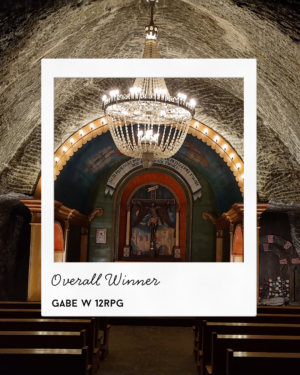
Sacred Spaces Photography Competition
5th October
Over the summer the RE department ran a Sacred Spaces Photography competition, inviting students to submit their own original photographs of a sacred space they have visited. Students were challenged to capture...
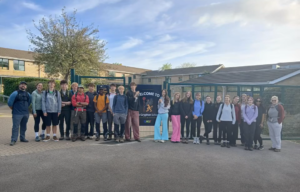
Annual Sixth Form Sponsored Walk
5th October
The annual Sixth Form sponsored walk proved to be a brilliant success again this year as students took on a 20+km around Sherborne and the surroundings villages. A huge well done to...